

What is Padmasana?
Padmasana (Lotus Pose) is a traditional seated yoga posture widely used in meditation and breathing practices. It involves crossing the legs and placing each foot on the opposite thigh, creating a stable and symmetrical base for the body.
It is considered one of the most effective poses for deep meditation, mindfulness, and spinal alignment.
Padmasana is the lotus position. It is one of the simplest and most common yoga postures, and it can be done with or without a yoga mat. The pose isolates the spine, opens the chest, and tones the abdominal muscles. Padmasana also helps to relax the mind and clear the mind of thoughts.
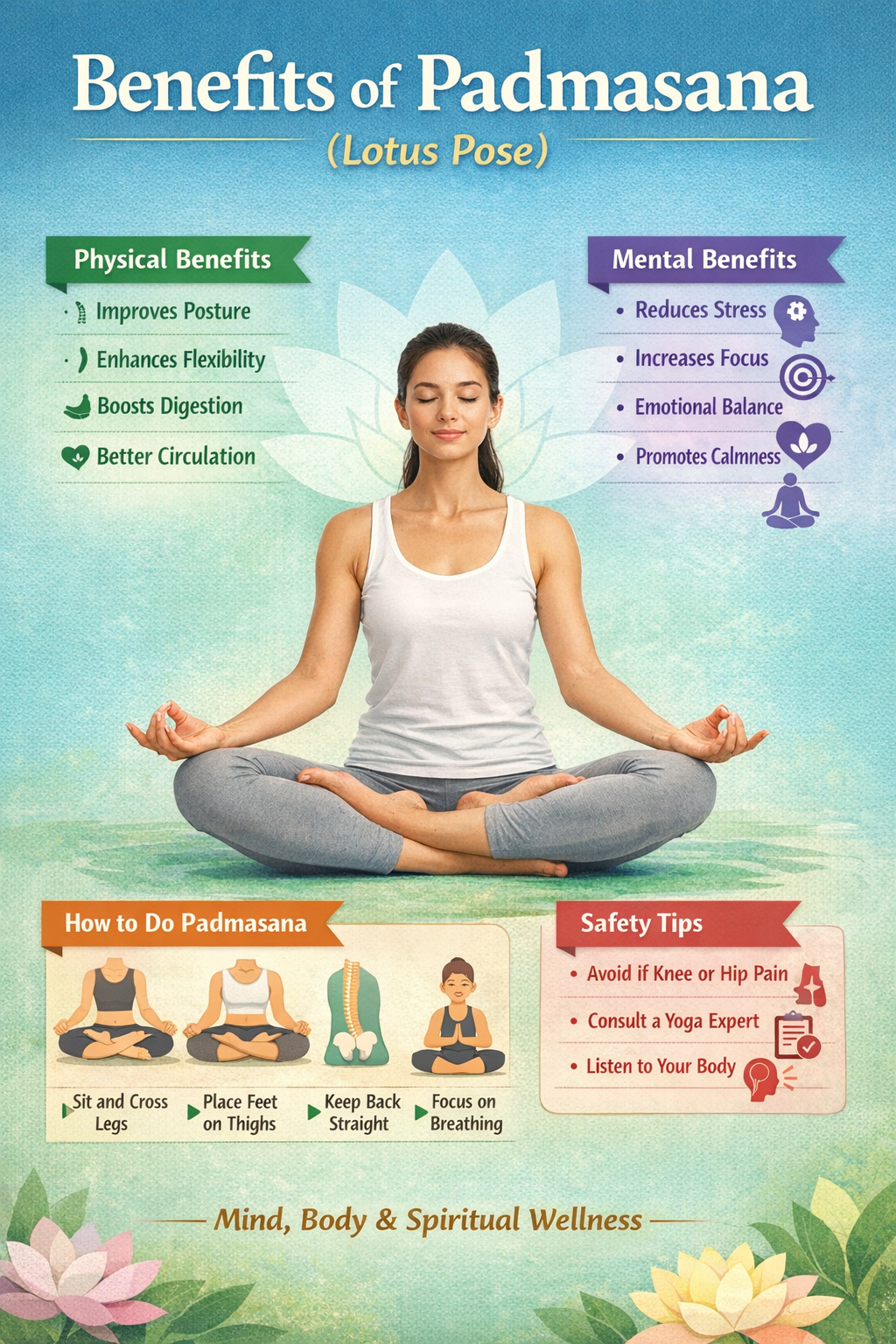
How to Practise Padmasana- Step by Step Process
- Step 1: Take a seat on the ground or a mat with your legs extended in front of you, keeping your spine straight.
- Step 2: Cross your right knee over your left thigh. Make sure your right foot’s sole is facing upward and that the heel is near to your abdomen.
- Step 3: Next, do the same with your left leg as in Step 2.
- Step 4: With your legs crossed and your feet on the thighs on either side of you, assume the mudra position by placing both hands on your knees.
- Step 5: Make sure your spine is upright and your head is straight at all times.
- Step 6: Remain in this position and keep taking slow, deep breaths in and out.
The Main Benefits of Padmasana:
- It relieves stress and tension in the body.
- It can improve circulation and help relieve pain.
- It increases concentration and mindfulness.
- It helps you connect with your inner energy.
Improves Digestion
Padmasana, or the lotus pose, has long been considered a powerful yoga pose for improving digestion. The full-body relaxation and meditation that comes with practicing padmasana can help to cleanse the body of toxins and impurities and improve overall digestive health.
Eases childbirth
Padmasana, also known as “Lotus pose,” is a simple and effective way to ease childbirth. The pose helps to reduce stress on the pelvic area, which can improve labor and delivery. Additionally, the deep breathing exercises that are involved in Padmasana help to increase oxygen levels in the uterus and improve blood flow.
Reduces Menstrual Cramps
Padmasana is often recommended as a remedy for menstrual cramps. The pose involves sitting with your legs straight out in front of you and your palms flat on the floor beside you.
As Pramadasana yoga eases the abdominal area, this region becomes more relaxed, reducing unfavorable menstrual cramping. This yoga pose strengthens pelvic areas, offering them more elasticity, which can reduce the risk of suffering cramps during menstruation.
Increase in Energy Levels
Padmasana, the Lotus pose, is said to increase energy levels and calm the mind. It is a seated pose that requires little effort and can be done in any position. Lotus pose is often recommended for people who are struggling with anxiety or depression, as it has been shown to provide relief.
Helps relax the mind and alleviates stress
Trying to relax and de-stress can be a difficult task, but the Lotus pose may be one of the most effective ways to achieve this. It is a seated position that helps to relax the body and mind. The posture is also known to help improve focus and concentration, as well as reduce stress levels.
Who Should Avoid Padmasana?
Since this is a YMYL (health-related) topic, safety is critical.
Avoid or modify if you have:
- Knee injuries
- Hip problems
- Ligament issues
- Severe arthritis
Disclaimer: Always consult a qualified yoga instructor or healthcare professional before attempting advanced poses.
Conclusion
In conclusion, padmasana is a powerful pose that can help you focus, clear your mind, and reduce stress. It’s also a great way to gain deep relaxation and improve your circulation. If you’re looking for a pose that can promote peace of mind and physical relaxation, padmasana is definitely the pose for you!
FAQ
1. What are the main benefits of Padmasana?
A. Padmasana improves posture, enhances focus, reduces stress, and supports meditation by stabilizing the body and calming the mind.
2. Is Padmasana good for beginners?
A. It can be challenging for beginners. Starting with easier poses like Sukhasana is recommended before progressing.
3. How long should I sit in Padmasana?
A. Begin with 2–5 minutes and gradually increase to 15–30 minutes based on comfort.
4. Does Padmasana help with stress?
A. Begin with 2–5 minutes and gradually increase to 15–30 minutes based on comfort.
5. Can Padmasana improve posture?
A. Yes, it encourages a straight spine, which helps improve overall posture.
6. Is Padmasana safe for knee pain?
A. No, individuals with knee pain should avoid or modify this pose to prevent injury.
7. What is the best time to practice Padmasana?
A. No, individuals with knee pain should avoid or modify this pose to prevent injury.


