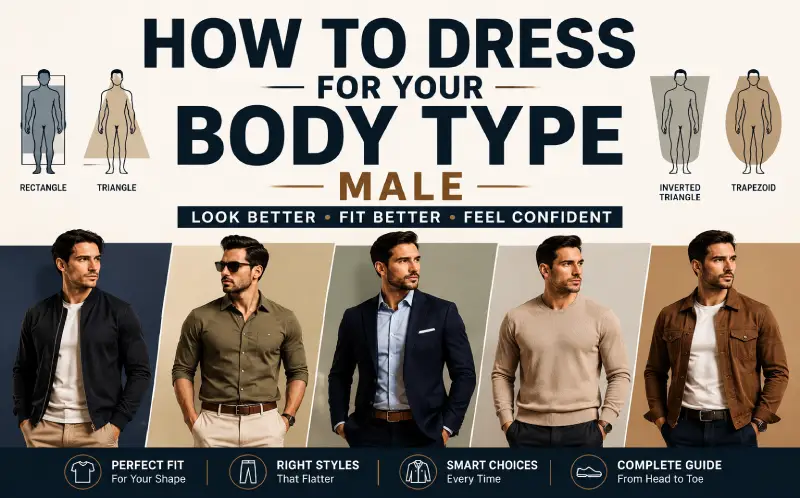
Choosing stylish clothes is only half the equation. The real secret to looking well-dressed is wearing clothing that complements your male body type. Two men can wear the same outfit, yet one looks effortlessly stylish while the other appears uncomfortable. The difference often comes down to understanding body proportions and selecting clothing that creates visual balance.
Dressing for your body type does not mean following strict fashion rules or limiting your wardrobe. Instead, it helps you understand which cuts, fits, colors, and styles naturally enhance your appearance. Whether you’re tall, broad-shouldered, slim, athletic, or carrying extra weight around the midsection, the right clothing can improve your silhouette and boost your confidence.
This guide explains how to identify your body shape and provides styling advice tailored to different male body types. By the end, you’ll know exactly how to choose clothes that fit well, flatter your frame, and help you build a wardrobe that works for you.
Read Also: Polo vs Crew Neck T-Shirts
Why Dressing for Your Body Type Matters
Most men focus on trends, brands, or colors when buying clothes. While these elements matter, they are less important than wearing garments that suit your natural proportions. A perfectly tailored outfit can make you appear taller, slimmer, broader, or more balanced without changing your physique.
Understanding your body type helps eliminate guesswork while shopping. Instead of buying clothes simply because they’re fashionable, you’ll know which styles improve your overall appearance. This approach saves money, reduces wardrobe mistakes, and creates a consistent personal style.
Benefits of dressing for your body type include:
- Creates a balanced body silhouette
- Improves confidence and first impressions
- Makes clothes fit more naturally
- Highlights your best physical features
- Minimises areas you prefer not to emphasise
- Simplifies shopping decisions
- Builds a versatile wardrobe that lasts beyond trends
The goal isn’t to change your body—it’s to dress it intelligently.
How to Identify Your Body Shape
Before choosing the right clothing, you need to identify your body type accurately. Men’s body shapes are determined by shoulder width, chest size, waist measurements, and overall proportions rather than weight alone. Two men with the same weight can have completely different body shapes.
Stand in front of a full-length mirror while wearing fitted clothing or take body measurements using a measuring tape. Compare the width of your shoulders, chest, waist, and hips. Pay attention to where your body is widest and how your upper and lower body relate to one another.
Ask yourself these questions:
- Are your shoulders wider than your waist?
- Is your waist wider than your chest?
- Are your shoulders and hips roughly the same width?
- Do you have a naturally athletic build?
- Is most of your weight carried around the midsection?
Your answers will usually place you into one of the five common male body types.
Read Also: Best Wrinkle-Free Cotton Shirts for Rainy Season
Common Male Body Types
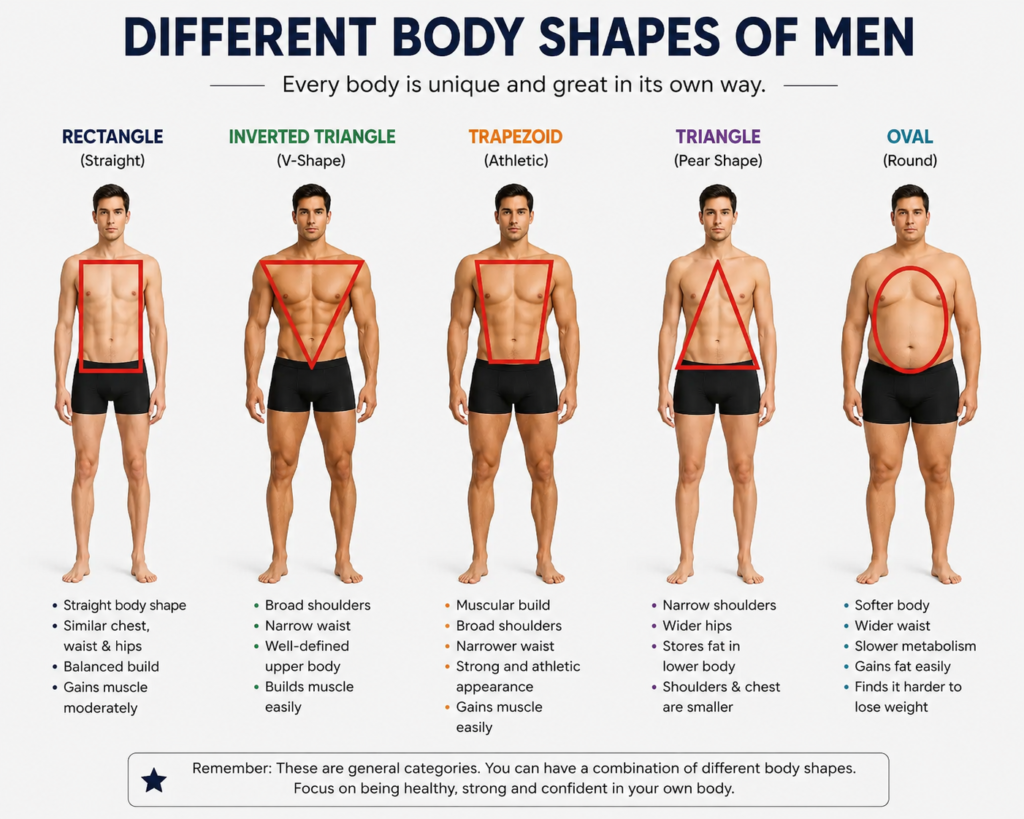
Although every man’s physique is unique, most body shapes fall into five broad categories. Knowing which one best matches your proportions makes it much easier to choose clothing that creates a balanced and stylish appearance.
Rectangle Body Shape
Men with a rectangle body shape have shoulders, chest, and waist that are similar in width. Their body appears straight with little difference between the upper and lower torso. Many naturally slim or tall men fall into this category.
The styling objective is to create the illusion of broader shoulders and a more defined upper body while adding visual structure.
Characteristics
- Shoulders and waist have similar measurements
- Straight body profile
- Lean or slim appearance
- Minimal waist definition
- Balanced but less athletic silhouette
What to Wear
- Choose slim-fit shirts instead of oversized styles.
- Wear structured blazers with padded shoulders.
- Layer with overshirts, bomber jackets, or denim jackets.
- Select crew neck or Henley T-shirts to add volume around the chest.
- Wear straight-fit or slim-fit trousers for balanced proportions.
- Use horizontal stripes across the chest to create width.
- Add lightweight jackets to build structure.
Avoid
- Oversized clothing that hides your shape.
- Skinny jeans that make your upper body appear smaller.
- Extremely loose shirts.
- Longline tops that make the torso look longer.
Related Article: How to Dress a Rectangle Body Shape for Men
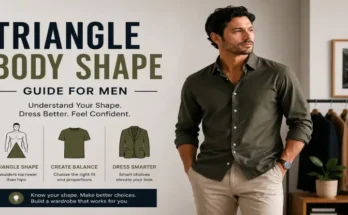
Triangle Body Shape
The triangle body shape features hips and waist that are wider than the shoulders. Weight tends to be concentrated around the lower torso, making the upper body appear narrower.
The aim is to visually broaden the shoulders while reducing emphasis on the waist to create a more proportional appearance.
Characteristics
- Waist wider than shoulders
- Narrow upper body
- Broader hips
- Weight often carried around the abdomen
- Less shoulder definition
What to Wear
- Wear jackets with structured shoulders.
- Choose blazers with moderate shoulder padding.
- Try patterned shirts or textured fabrics on the upper body.
- Wear darker trousers to reduce attention on the lower body.
- Opt for straight-leg jeans instead of skinny fits.
- Use layers such as overshirts and lightweight jackets.
- Select polos or Henley shirts that add visual interest.
Avoid
- Bright-colored trousers.
- Pleated pants that add extra volume.
- Tight shirts around the stomach.
- Large pockets near the hips.
Related Article : Triangle Body Shape Style Guide for Men
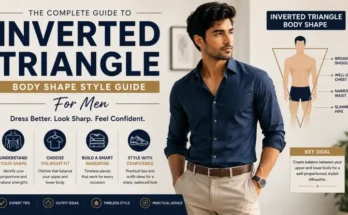
Inverted Triangle Body Shape
The inverted triangle is often associated with athletes and gym enthusiasts. Broad shoulders and a well-developed chest taper down to a narrower waist, creating a strong V-shaped physique.
Although this body type is widely considered balanced, the goal is to avoid exaggerating shoulder width while maintaining proportion throughout the outfit.
Characteristics
- Broad shoulders
- Wide chest
- Narrow waist
- Athletic appearance
- Naturally defined upper body
What to Wear
- Choose fitted but not tight shirts.
- Wear polo shirts with a structured collar.
- Select straight-fit chinos or tailored trousers.
- Use lightweight knitwear instead of bulky layers.
- Wear jackets with minimal shoulder padding.
- Choose simple designs with clean lines.
Avoid
- Heavy shoulder padding.
- Large chest pockets.
- Oversized collars.
- Super-skinny trousers that exaggerate upper-body width.
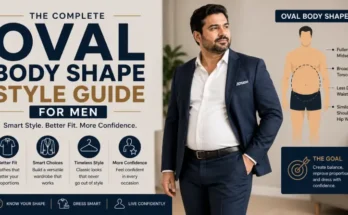
Oval Body Shape
Men with an oval body shape carry more weight around the stomach than the shoulders or hips. The waist becomes the widest part of the body, creating a rounded silhouette.
Good styling focuses on creating cleaner vertical lines, improving proportions, and avoiding unnecessary bulk without sacrificing comfort.
Characteristics
- Fuller midsection
- Rounded body profile
- Shoulders narrower than waist
- Less waist definition
- Weight concentrated around the abdomen
What to Wear
- Wear regular-fit shirts with enough room for comfort.
- Choose darker solid colors for a slimming effect.
- Use vertical stripes to elongate the body.
- Wear single-breasted blazers.
- Select flat-front trousers instead of pleated styles.
- Choose V-neck sweaters to lengthen the neckline.
- Keep outfits simple with minimal patterns.
Avoid
- Tight clothing around the stomach.
- Oversized garments that add unnecessary bulk.
- Large belts with oversized buckles.
- Thick horizontal stripes.
Related Article: Oval Body Shape Style Guide for Men
Trapezoid Body Shape
The trapezoid body shape is considered one of the most naturally balanced male physiques. The shoulders are slightly wider than the waist, creating proportion without appearing overly muscular.
Most ready-to-wear clothing is designed around this shape, making it easier to find flattering outfits.
Characteristics
- Shoulders slightly broader than waist
- Defined chest
- Moderate waist
- Athletic but natural proportions
- Balanced overall appearance
What to Wear
- Wear tailored shirts and chinos.
- Choose slim-fit or modern-fit suits.
- Experiment with different colors and patterns.
- Layer with jackets, overshirts, and knitwear.
- Wear almost any neckline, including crew necks, polos, and V-necks.
- Invest in quality wardrobe essentials.
Avoid
- Extremely oversized clothing.
- Very tight skinny fits.
- Poorly tailored garments.
- Clothing that disrupts natural balance.
Common Dressing Mistakes Men Make
Many style problems are caused by poor fit rather than poor fashion choices. Understanding these common mistakes can help you build a wardrobe that looks more refined and feels more comfortable. Regardless of your body type, avoiding these errors will significantly improve your overall appearance.
Avoid These Common Mistakes
- Wearing clothes that are too tight.
- Choosing oversized garments to hide your body.
- Ignoring tailoring.
- Buying trends instead of timeless basics.
- Wearing trousers with incorrect length.
- Matching every trend without considering body proportions.
- Ignoring shoulder fit when buying shirts and jackets.
- Wearing belts, accessories, or patterns that overwhelm your frame.
Read Also: Cotton vs Linen Shirts: Which Fabric Is Better?
Universal Styling Tips for Every Man
No matter your body type, certain style principles apply to everyone. Building a wardrobe around fit, quality, and versatility will always outperform chasing short-lived trends. These timeless tips help create a polished appearance for any occasion.
Follow These Style Rules
- Prioritize fit over expensive brands.
- Build a wardrobe with timeless essentials.
- Choose quality fabrics that drape naturally.
- Wear clean, well-maintained footwear.
- Keep accessories minimal and purposeful.
- Learn basic tailoring for trousers and shirts.
- Dress appropriately for the occasion.
- Wear clothing with confidence.
Related Article: Slim Fit vs Regular Fit Shirts: Which One Is Right for You?
Key Takeaways Before Choosing Clothes
No matter your body shape, a few universal principles apply to every man. Well-fitting clothing will almost always look better than expensive clothing that doesn’t suit your proportions.
Remember these essentials:
- Prioritise proper fit over fashion trends.
- Avoid clothing that is excessively tight or overly loose.
- Choose garments that complement your proportions rather than hide your body.
- Build a wardrobe around timeless basics before experimenting with trends.
- Confidence comes from wearing clothes that fit comfortably and naturally.
Frequently Asked Questions
What is the best body type for men’s fashion?
The trapezoid body shape is often considered the easiest to dress because of its naturally balanced proportions. However, every body type can look stylish with clothing that fits correctly.
How do I know my body type?
Measure your shoulders, chest, waist, and hips, then compare their proportions. Your widest area generally determines your body shape.
Should men wear slim-fit clothes?
Slim-fit clothing works well when it follows your body’s natural shape without feeling restrictive. Avoid anything excessively tight or oversized.
Can clothing make you look taller or slimmer?
Yes. Vertical lines, proper fit, monochromatic outfits, and tailored clothing can create the illusion of height and a leaner silhouette.
Is body type more important than fashion trends?
Yes. Trends change frequently, but understanding your body type helps you choose clothing that consistently looks flattering and timeless.
Conclusion
Learning how to dress for your body type is one of the most valuable style skills any man can develop. Instead of relying on trends or copying someone else’s wardrobe, focus on understanding your proportions and choosing clothing that creates balance, comfort, and confidence.
Whether you have a rectangle, triangle, inverted triangle, oval, or trapezoid body shape, the right fit will always outperform the latest fashion trend. Invest in well-fitting basics, tailor your clothing when necessary, and build a wardrobe that complements your physique. Over time, these small adjustments will improve not only how you look but also how you feel every time you get dressed.